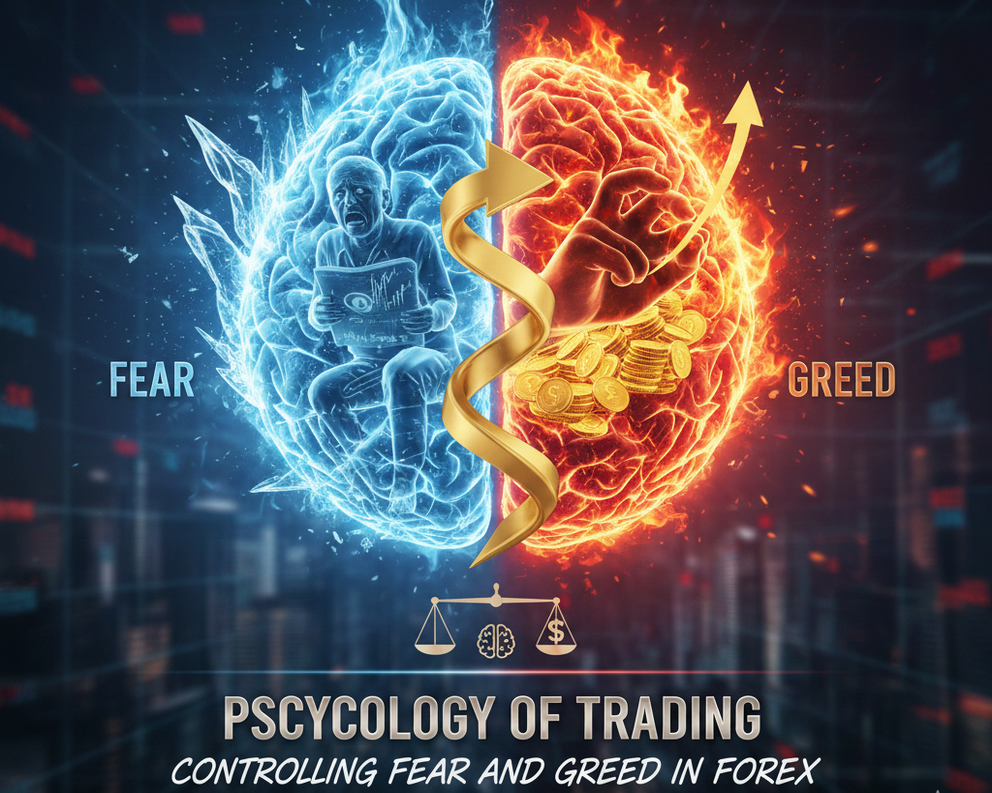
Success in forex trading isn’t only about strategies, indicators, or market analysis. The real battle often happens inside the mind. Two emotions—fear and greed—control most trading decisions, especially for beginners. Understanding and managing them is what separates consistent traders from impulsive ones.
In this blog, we break down how psychology influences trading outcomes and how you can strengthen your mindset to make smarter, calmer decisions in the forex market.
Why Trading Psychology Matters
Even with a perfect strategy, traders often struggle due to emotional reactions:
- Closing trades too early
- Holding losing trades too long
- Overtrading after a winning streak
- Entering trades without analysis
- Hesitating to enter good setups
These actions come from fear, greed, impatience, and overconfidence, not market logic. Trading psychology helps you build discipline, confidence, and emotional control—skills essential for long-term growth.
1. Understanding Fear in Forex Trading
Fear shows up in many forms:
- Fear of losing money: Traders exit too early or avoid entering quality trades because losses feel painful.
- Fear of missing out (FOMO): Jumping into trades late because “others are profiting” leads to poor decisions.
- Fear of being wrong: Some traders hold losing trades hoping the market will reverse, just to avoid accepting they made a mistake.
Fear causes traders to skip valid opportunities, exit winning trades too early, enter trades without confirmation, and make inconsistent decisions.
How to control fear: Follow a trading plan, use proper risk management, limit screen time, and start with small position sizes.
2. Understanding Greed in Forex Trading
Greed is the opposite emotion—wanting more than what your strategy allows. Greed appears when traders keep trades open “hoping” for bigger profits, increase lot size after a winning streak, enter multiple trades without analysis, or try to double accounts quickly. Greed leads to overexposure, overconfidence, and eventually big losses.
How to control greed: Set realistic profit targets, take profits according to your plan, avoid revenge trading, follow consistent risk percentages, and don’t increase lot size without growth in skill.
3. Build a Strong Trading Mindset
To manage emotions, traders need structure and consistency.
- A. Create a Trading Routine: Having a routine reduces stress and impulsive decisions. Include analysis time, journaling, breaks, and review sessions.
- B. Use a Trading Journal: Write down every trade—entry, exit, reasoning, emotions. Over time, your emotional patterns become clear.
- C. Accept Losses as Part of Trading: Even professional traders lose trades daily. The goal isn’t to avoid losses—it’s to manage them.
- D. Stay Educated: Knowledge builds confidence. When you understand the market deeply, emotions become easier to control.
4. Practical Techniques for Emotional Control
- The 5-Second Rule: Before entering/exiting a trade, take 5 seconds to breathe and confirm your plan.
- Fixed Risk Per Trade: Risk the same percentage every time (e.g., 1%). This builds consistency and reduces emotional pressure.
- Trade Only During Your Strategy Setups: If your setup isn’t there, stay out. Patience is a superpower in trading.
- Take Breaks After Big Wins or Losses: Both situations can trigger emotional decisions. Pause, reset, and return with a clear mind.
5. Final Thoughts: Master the Mind, Master the Market
Forex trading is more than charts, tools, and strategies—it’s a psychological game. Fear makes you exit too early. Greed makes you stay too long. Discipline keeps you consistent. The traders who succeed are not the ones with the “best strategy,” but those who manage their emotions with patience, control, and self-awareness.
At BTS Investments, we aim to help traders not just understand the markets, but understand themselves—because strong psychology is the foundation of long-term success.
Master the Mind. Master the Market.